Cannabis use becomes a treatment concern when cravings, failed attempts to stop, impairment, or harm begin to control your decisions rather than simply reflecting frequent use. You will be able to identify the warning signs, judge the urgency, choose an appropriate level of care, and compare providers using practical clinical questions.
Key takeaways
- Repeated failed attempts to stop can signal cannabis use disorder.
- Seek urgent help for psychosis, suicidal thoughts, severe confusion, or dangerous behaviour.
- Choose outpatient, intensive outpatient, or residential care based on safety and stability.
- Compare providers by medical supervision, therapy methods, aftercare, and relapse planning.
When does cannabis use become a disorder rather than a habit?
Frequency alone does not make marijuana use a disorder. Frequent use remains manageable when you can choose not to use, meet work or study obligations, avoid hazardous situations, and stop without repeated failed attempts or major distress.
The clearest marijuana addiction signs are loss of control and consequences. Ask yourself:
- Do you spend much of the day obtaining, using, or recovering from cannabis?
- Are you craving cannabis, using more than intended, or needing higher-potency products for the same effect?
- Have you tried to cut down and failed?
- Do you use in the morning, drive impaired, or operate equipment after using?
- Has cannabis harmed work, relationships, memory, sleep, finances, or mental health?
- Do you continue despite anxiety, depression, paranoia, legal problems, or conflict?
Cannabis use disorder is diagnosed when a problematic pattern causes significant impairment or distress, with at least two symptoms during 12 months. Two or three symptoms indicates mild CUD, four or five moderate, and six or more severe. A clinician also assesses route, potency, other substances, withdrawal, and functioning rather than relying on quantity alone.
Dependence describes tolerance or withdrawal; it can occur alongside CUD but does not prove it. Hazardous use warrants treatment even before severe dependence develops. Hallucinations, delusions, severe paranoia, mania, suicidal intent, or inability to care for yourself require urgent psychiatric assessment, not routine counselling alone.
What should you expect after stopping, and when is it urgent?
Withdrawal usually starts 24 to 48 hours after the last use. Common marijuana withdrawal symptoms include irritability, anxiety, restlessness, insomnia, vivid dreams, reduced appetite, depressed mood, headaches, sweating, nausea, physical discomfort, and strong cravings.
Symptoms often peak on days 2 to 6 and improve within two to three weeks, although heavy, frequent users can feel disrupted for longer. This cannabis withdrawal timeline does not automatically mean you need hospital detoxification.
| Situation | What you may notice | What to do |
|---|---|---|
| Expected withdrawal | Irritability, poor sleep, appetite loss, anxiety, low mood, restlessness, headaches, sweating, nausea, or cravings | Arrange routine medical or cannabis counselling support; seek help sooner if symptoms become unmanageable |
| Acute cannabis crisis | Extreme confusion, uncontrolled agitation, repeated vomiting, inability to stay awake, chest pain, seizure, or trouble breathing | Call emergency services or go to an emergency department |
| Cannabis-induced psychosis or severe psychiatric danger | Hallucinations, delusions, severe paranoia, mania, suicidal intent, or inability to care for yourself | Get urgent psychiatric assessment; do not leave the person alone |
A positive urine test cannot show current impairment or prove treatment failure because THC metabolites can remain after intoxication ends. Track sleep, cravings, mood, daily functioning, and return to use with a clinician. If psychosis, suicidal thinking, or dangerous behaviour appears, treat it as an acute cannabis crisis rather than waiting for routine counselling.
Which level of marijuana addiction treatment fits your situation?
Outpatient cannabis treatment is enough when you can stay safe at home, attend appointments, reduce or stop use, and act on a relapse plan without repeated returns to uncontrolled use.
| Level | What it provides | When it fits |
|---|---|---|
| Outpatient | Weekly therapy, craving skills, and relapse planning while you keep living at home | Stable housing, manageable withdrawal, no acute psychiatric danger, and reliable attendance |
| Intensive outpatient program | Several treatment sessions each week with stronger monitoring and structure | A failed quit attempt, frequent cravings, work or relationship impairment, or relapse despite standard outpatient care |
| Residential marijuana rehabilitation | 24-hour structure, separation from triggers, and coordinated mental-health and addiction treatment | Repeated relapse, severe uncontrolled use, an unsafe or substance-using home, or serious co-occurring illness |
| Medically supervised withdrawal | Clinical monitoring during withdrawal and assessment of other substances or medical risks | Polysubstance use, alcohol or sedative dependence, significant medical illness, severe agitation, or psychiatric instability |
Cannabis withdrawal alone does not automatically justify residential placement or medically supervised withdrawal. Hallucinations, delusions, severe paranoia, mania, suicidal intent, or inability to care for yourself require urgent psychiatric assessment rather than routine counselling.
When comparing providers such as Crossroad Wellness Rehab, ask whether the assessment covers cannabis potency, other substances, depression, trauma, psychosis, sleep, and home safety—not just the number of grams used. A lapse calls for reassessment; repeated uncontrolled use signals that the diagnosis, treatment intensity, or living environment needs to change.
Related products
 | Drug & Substance Abuse Treatment Drug & Substance Abuse Treatment > Drug & Substance Abuse Treatment (Pune South – Undri, Pisoli, NIBM) We provide treatment for drug dependency on substances such as opioids,... View product → |
 | Medically Supervised Detox & Withdrawal Management Medically Supervised Detox & Withdrawal Management The Detox Program at Crossroad Wellness Rehabilitation ensures safe and medically monitored withdrawal from alcohol, drugs, and high-risk... View product → |
What happens during treatment, and what role can medication play?
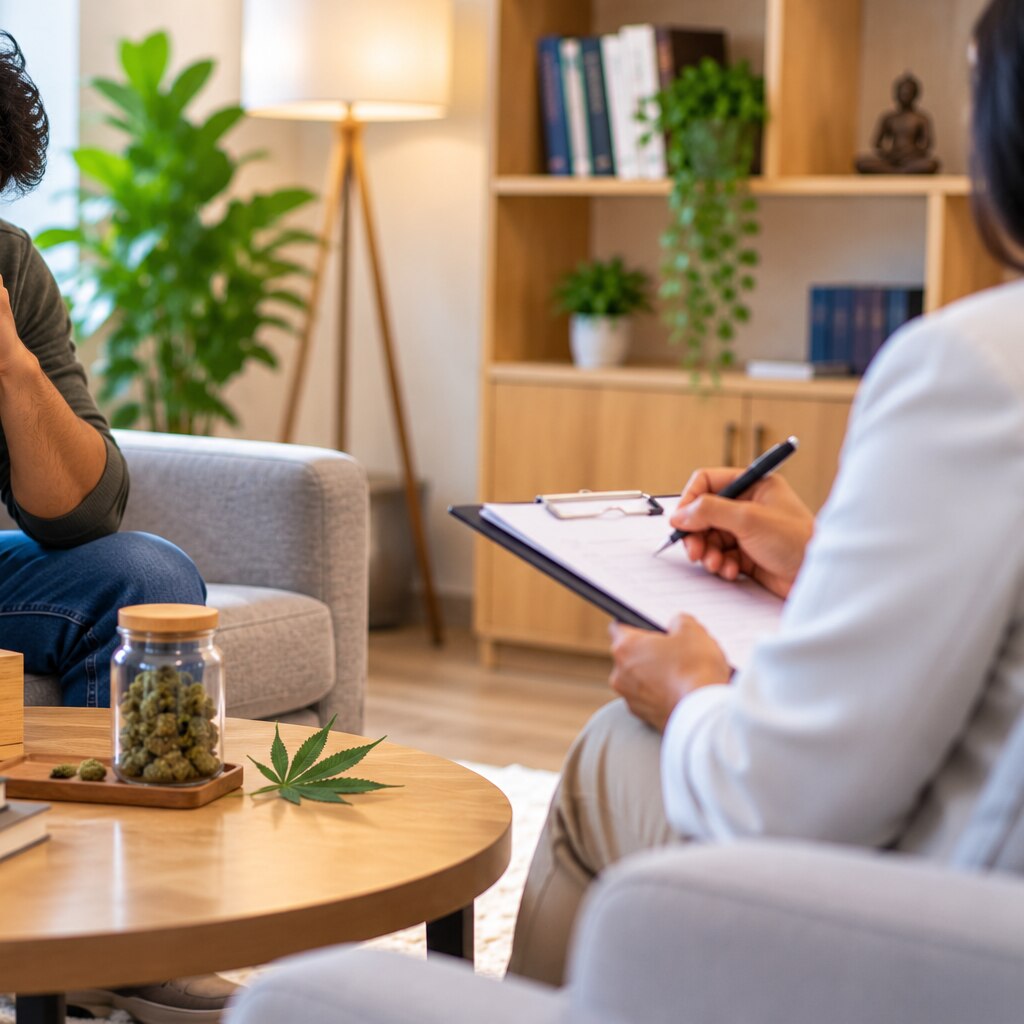
Assessment starts the cannabis treatment process. Clinicians review potency, route, age of onset, amount and timing of use, failed quit attempts, withdrawal, hazardous use, daily functioning, other substances, suicidality, and symptoms of depression, anxiety, trauma, bipolar disorder, or psychosis.
- A clear goal: abstinence, reduction, or another measurable target
- Motivational interviewing to explore ambivalence without arguing
- Cognitive behavioral therapy for cannabis to identify triggers, challenge unhelpful thinking, and practise coping skills
- Contingency management cannabis treatment, which offers predetermined rewards for attendance or cannabis-negative samples
- Sleep support, including a regular schedule and treatment of an underlying sleep or mental-health problem
- Family work when conflict, monitoring, communication, or household safety affects recovery
These parts reinforce one another. Motivational interviewing helps you choose a workable goal; CBT builds the skills to handle craving, boredom, stress, and high-risk situations. Contingency management can improve early engagement, but benefits are often modest, so relapse planning and follow-up matter after sessions end.
Medication has limits. No medication is approved specifically for cannabis use disorder, and there is no standard detox drug comparable to opioid agonist treatment. A clinician can treat withdrawal symptoms supportively, address insomnia or anxiety cautiously, and prescribe medication for conditions such as depression or psychosis when appropriate.
Do not self-medicate with sedatives or cannabis products.
A lapse calls for reassessment, not automatic discharge. Recheck the diagnosis, potency and pattern of use, co-occurring conditions, treatment intensity, and safety at home.
How can you compare providers and plan recovery after treatment?
Choose a provider that can reassess your diagnosis, treatment intensity, and safety when use returns—not one that treats detoxification as the whole intervention. To learn how to choose cannabis treatment, ask who delivers CBT, motivational enhancement, contingency management, and dual diagnosis care for depression, anxiety, psychosis, or other substance use.
| Provider feature | Suitable support | Too little support |
|---|---|---|
| Clinical capability | Licensed clinicians, evidence-based therapy, family involvement when appropriate, and residential or 24-hour escalation when safety requires it | Counselling without a named approach or access to psychiatric review |
| Safety checks | Screening for suicidal thoughts, psychosis, medical problems, intoxication, polysubstance use, unsafe housing, and impaired driving | Intake based only on cannabis quantity |
| Progress measures | Self-reported use, cravings, withdrawal, sleep, functioning, attendance, and goals; urine results used as supporting evidence | “Success” judged by one positive urine cannabinoid test |
| Discharge and follow-up | Written triggers, coping steps, emergency contacts, appointments, family supports, and cannabis treatment aftercare | A final appointment with no continuing-care plan |
Before leaving, agree on who you will contact after a lapse and what happens next. A lapse does not prove failure, but repeated uncontrolled use warrants review of potency, pattern, co-occurring illness, treatment intensity, and living conditions.
Ask for a relapse prevention marijuana plan covering sleep, cravings, high-risk people and places, transportation, and rapid re-entry to care.
Frequently asked questions
When does cannabis use become a disorder rather than a habit?
Cannabis use becomes concerning when you cannot reliably control it, continue despite harm, neglect work or relationships, use in hazardous situations, or repeatedly try and fail to stop.
What should you expect after stopping marijuana, and when is it urgent?
Withdrawal can include irritability, anxiety, sleep problems, reduced appetite, restlessness, and cravings. Seek urgent help for suicidal thoughts, psychosis, severe confusion, or dangerous behaviour.
Which level of marijuana addiction treatment fits your situation?
Outpatient care suits people who are medically and emotionally stable with a safe home. Intensive outpatient or residential treatment fits stronger cravings, repeated relapse, unsafe surroundings, or problems requiring close supervision.
What happens during marijuana addiction treatment?
Treatment usually includes assessment, an individual recovery plan, counselling or psychotherapy, craving and trigger management, relapse prevention, and continuing care. Clinicians decide whether medication is appropriate for specific symptoms or co-occurring conditions.
How can you compare providers and plan recovery after treatment?
Ask about medical oversight, therapy credentials, withdrawal support, family involvement, dual-diagnosis care, emergency procedures, discharge planning, and follow-up after residential or outpatient treatment.
Related products
 | Clinical Hypnotherapy for Addiction, Anxiety & Behavioral Healing Clinical Hypnotherapy for Addiction, Anxiety & Behavioral Healing Crossroad Wellness Rehabilitation offers Clinical Hypnotherapy to help individuals access their subconscious mind for deep emotional healing,... View product → |
 | Comprehensive Rehabilitation Services Comprehensive Rehabilitation Services > Dual Diagnosis Treatment (Mental Health + Addiction) Crossroad Wellness Rehabilitation specializes in treating individuals who experience both... View product → |
 | Addiction Counselling & Recovery Support Addiction Counselling & Recovery Support At Crossroad Wellness Rehabilitation in Undri, Pune, our Addiction Counselling Program is designed to help individuals break free from dependency on... View product → |
 | Nasha Mukti Kendra in Undri, Pune – Safe & Holistic De-Addiction Nasha Mukti Kendra in Undri, Pune – Safe & Holistic De-Addiction At Crossroad Wellness Rehabilitation – Undri, Pune, our Nasha Mukti Kendra provides a structured, compassionate, and evidence-based de-addiction... View product → |