
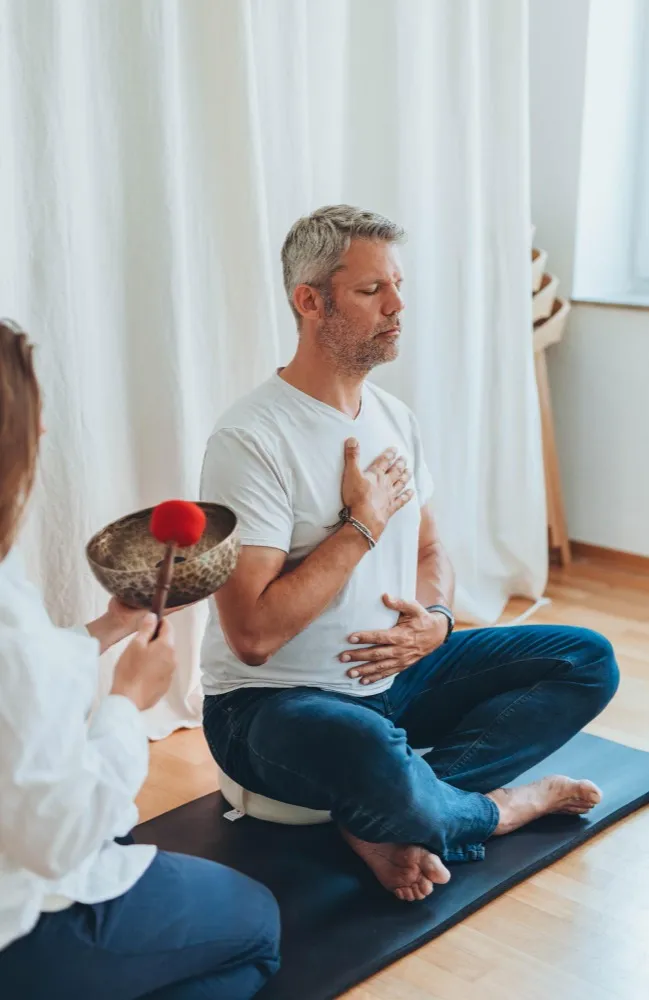
Cravings often feel urgent. A difficult emotion, stressful event, or familiar environment can trigger an automatic desire to return to alcohol or drugs. A Mindfulness Healing Program may help some people develop the ability to notice these internal experiences without immediately acting on them.
Mindfulness is not about eliminating every uncomfortable thought. It involves deliberately paying attention to present experiences with greater awareness.
Within addiction rehabilitation, that skill can have practical applications.
Mindfulness Creates Space Between Urge and Action
People with long-standing substance-use patterns may become accustomed to responding quickly to discomfort.
Stress appears, so they use a substance. Anxiety increases, so they seek immediate relief. A craving develops, and habitual behaviour follows.
Mindfulness practices encourage the individual to notice what is happening first.
A person may learn to identify physical sensations, emotions, thoughts, and urges before deciding how to respond.
That small interruption can provide an opportunity to use another coping strategy.
Common Mindfulness Practices
A structured Mindfulness Healing Program may use several techniques.
These can include:
- Mindful breathing
- Guided meditation
- Body-awareness exercises
- Observing thoughts without immediately reacting
- Mindful movement
- Relaxation exercises
- Awareness of emotional triggers
The practices should be adapted to the individual's circumstances rather than imposed as a universal solution.
Mindfulness Is Not a Replacement for Clinical Treatment
This distinction is important.
Someone experiencing significant substance dependence may require medical assessment, withdrawal management, psychological treatment, or other professional interventions.
Mindfulness cannot make potentially dangerous withdrawal medically safe, nor should it replace evidence-based addiction care.
Its role is supportive.
Using Mindfulness During Cravings
Imagine that someone notices a craving after receiving a stressful phone call.
An automatic response might be to immediately search for alcohol or drugs.
Mindfulness-based skills can encourage the person to recognise the sequence: stress, physical tension, thoughts about substance use, increasing craving, and the impulse to act.
They can then apply an alternative response such as controlled breathing, contacting a support person, changing environment, attending a therapeutic activity, or using another strategy developed during treatment.
Why Structured Practice Helps
Mindfulness skills can be difficult to use for the first time during an intense craving.
Regular practice in a structured environment helps people become familiar with the techniques before they need them in challenging situations.
For individuals attending rehabilitation in Pune, Maharashtra, mindfulness may therefore form part of a broader daily routine involving counselling, group work, wellness activities, and relapse-prevention education.
At Crossroad Wellness Rehab, complementary approaches can be considered alongside other components of structured addiction recovery according to individual needs.
Applying Mindfulness After Rehabilitation
The long-term usefulness of mindfulness becomes clearer when people return to ordinary life.
Potential triggers can appear anywhere: traffic, workplace pressure, disagreements at home, loneliness, social gatherings, financial problems, or unexpected contact with people associated with past substance use.
A person cannot remove every trigger from life.
They can, however, develop healthier ways of recognising and responding to those triggers.
A Mindfulness Healing Program is therefore most valuable when it contributes to practical recovery skills rather than being treated as an isolated wellness activity. Combined with appropriate medical care, psychological support, structured routines, and relapse-prevention planning, mindfulness can help selected individuals become more aware of cravings and emotional responses while developing healthier ways to manage them.
Keywords